
Introduction
Most AI automation content assumes you’re a developer.
That assumption is wrong — and expensive.
The businesses building traction on the AI automation wave right now are not software engineers. They’re consultants, freelancers, and ex-operators who spotted one thing early: small businesses have painful, repetitive problems, and Claude Code can solve them faster than any human team.
This article shows you how to build an AI automation service from scratch using Claude Code — even if you’ve never written a line of code — and how to price it to reach $5,000 in monthly recurring revenue.
Why the AI Automation Market Is Moving Right Now
The numbers are not hype. Claude Code — Anthropic’s AI agent for automating work — reached $2.5 billion in annual run-rate revenue by February 2026, according to Constellation Research. Business subscriptions to Claude Code quadrupled in the first quarter of 2026 alone.
That growth is a demand signal, not marketing spin. Small business owners are actively looking for help automating their operations. The question is who will serve them.
The gap is not technical. Most small businesses do not need a developer. They need someone who can translate their workflow problems — missed leads, slow invoices, manual reporting — into automated systems. Claude Code is the tool that lets you become that person without a computer science degree.
What Claude Code Actually Is (and Why You Don’t Need to Code)
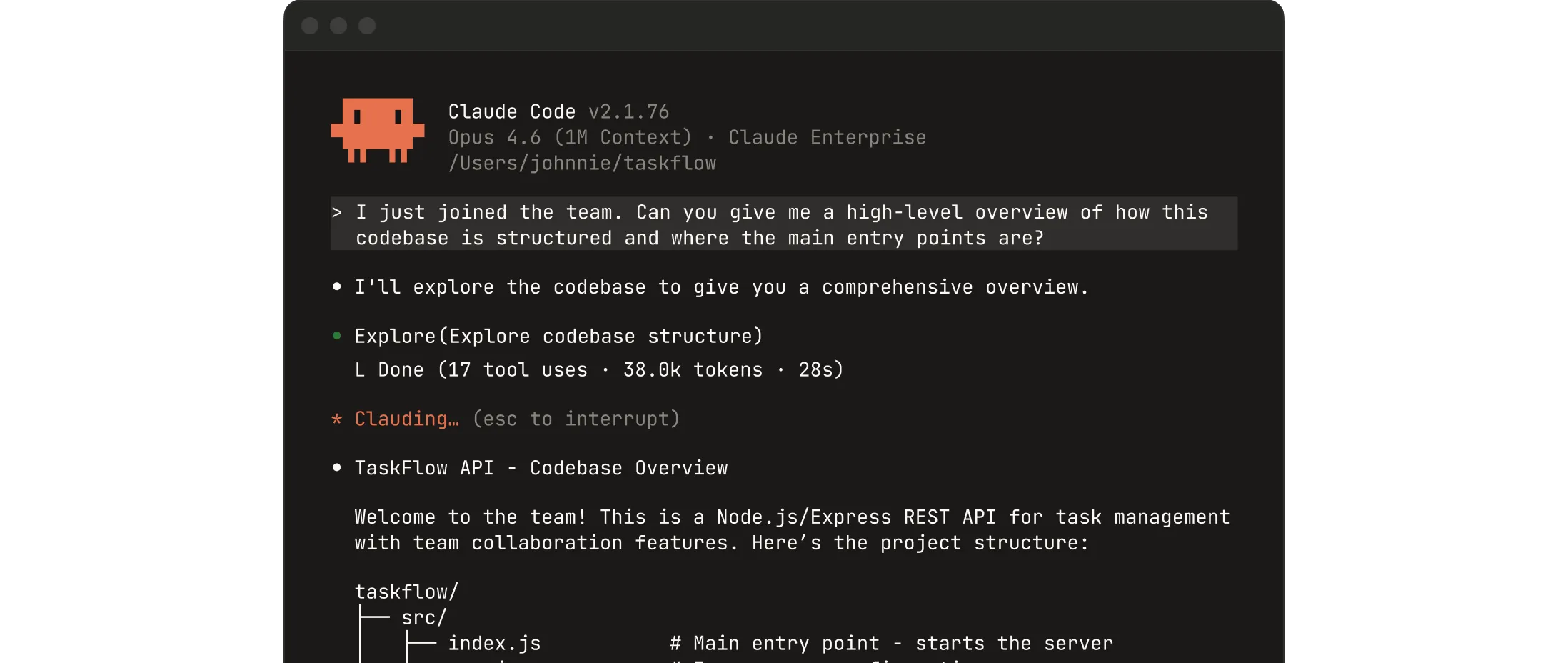
Claude Code is an AI agent built by Anthropic. You describe a task in plain language, and it figures out how to execute it — writing scripts, connecting tools, reading files, moving data between systems.
In January 2026, Anthropic launched Claude Cowork, a graphical version of Claude Code built specifically for non-technical users. You describe the outcome you want, give it access to your files, and it works autonomously — handling file organization, report generation, and workflow automation without you touching a line of code.
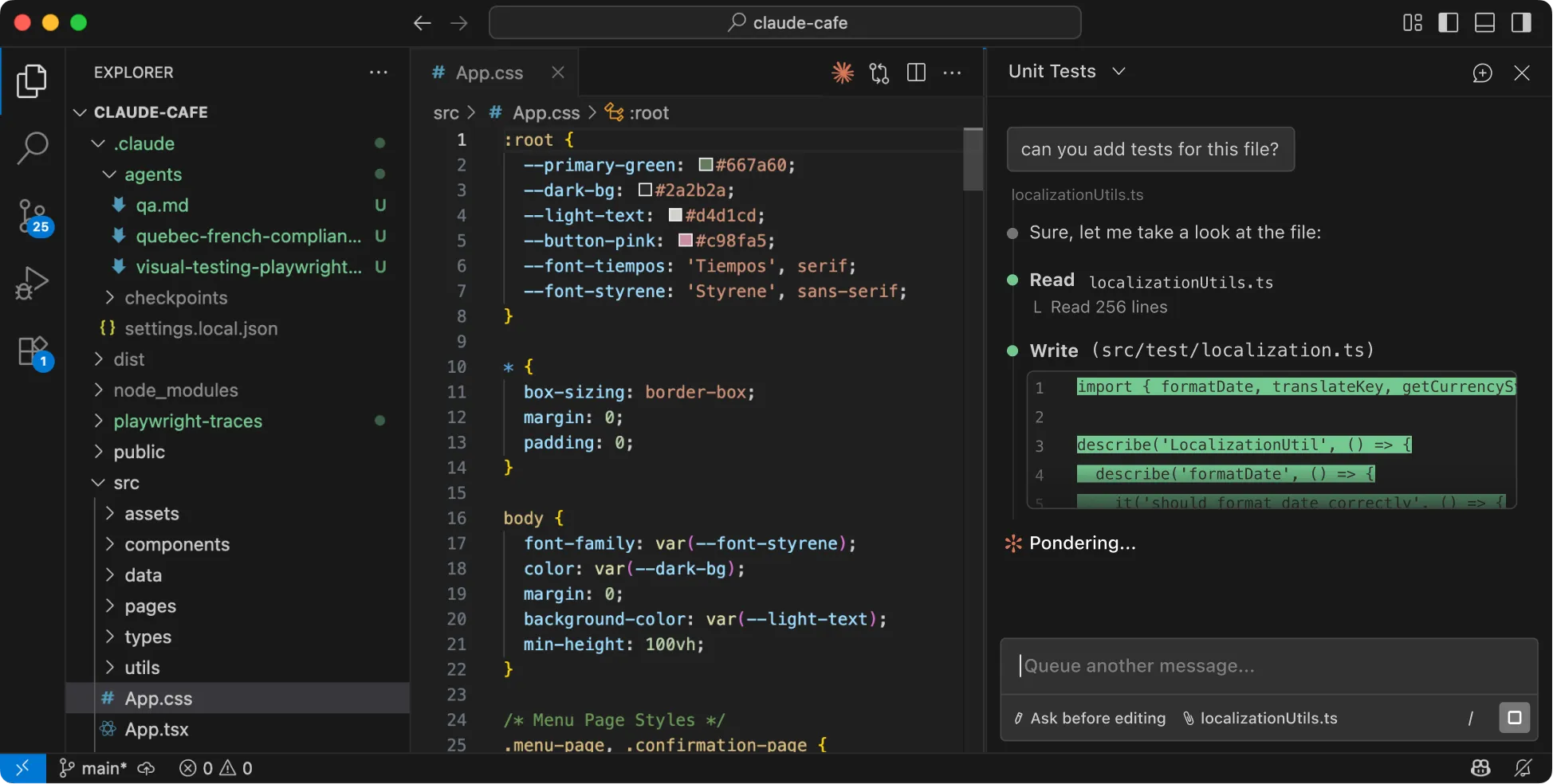
For service providers, this changes the economics of delivery entirely. You do not need a technical co-founder. You do not need to hire developers. You need to understand what the client’s problem is — Claude Code handles the build.
The 4 Automations SMBs Pay For Every Month
Not every automation has the same market value. Focus on these four — they solve real pain, they’re easy to scope, and clients renew them without negotiating:
1. Lead capture and follow-up
A prospect fills out a form or sends an enquiry. Claude Code pulls the data, enriches the contact, drafts a personalized reply, and logs it to the CRM. Response time drops from hours to seconds. Clients feel the value in week one.
2. Invoice and payment tracking
Claude Code reads unpaid invoice data from a spreadsheet or accounting tool, drafts reminder emails at set intervals, and flags overdue accounts for review. For any business with ten or more invoices per month, this automation alone justifies a retainer.
3. Weekly performance reporting
Pulling data from Google Analytics, ads dashboards, and sales sheets into a formatted summary — delivered every Monday morning, automatically. No analyst required.
4. Inbox triage and draft responses
Claude Code reads incoming emails, categorizes them by type, and drafts replies for the owner to approve. Business owners who spend two hours a day in their inbox recover meaningful time in the first week.
How to Price It (Without Underselling)
Start with a single, well-scoped automation. Do not try to sell a full AI stack to your first client. Here is a structure that works:
At two Starter clients, you’re at $1,000 MRR. At five clients, a mix of Starter and Growth, you’re approaching $5,000 MRR — with the bulk of your time spent on scoping new clients, not maintaining existing automations.
The key is recurring retainer, not one-off builds. Automations need monitoring and iteration. Clients are happy to pay monthly for a system that reliably runs.
Step-by-Step: Getting Your First Client
Step 1 — Pick one niche. Restaurant owners, ecommerce stores, law firms, real estate agents — any business with a repeating workflow problem. Specificity closes deals faster than a broad offer.
Step 2 — Find their one biggest pain. Do not pitch automation. Ask: “What does your team do on repeat every week that you wish just happened automatically?” Listen. That’s your scope.
Step 3 — Build a proof-of-concept. Use Claude Code to build a demo relevant to their problem. Show it working. You do not need a slide deck — you need a working example.
Step 4 — Charge for results, not hours. The value of a working lead follow-up system is not a few hours of your time — it’s the leads that stop falling through the cracks. Price accordingly.
Step 5 — Deliver, then expand. Once the first automation is stable, offer to add a second. That’s your upgrade path from Starter to Growth.
How AppCoders Helps
AppCoders is an AI automation studio. We build the same systems described in this article for SMB clients — handling everything from scoping to delivery to ongoing maintenance, so business owners get the results without the learning curve. If you want to implement AI automation in your business without figuring it out yourself, start with a free call.
Conclusion
The window to build an AI automation service with manageable competition is open now. Claude Code has removed the technical barrier. The remaining barrier is knowing which problems to solve and having the confidence to charge for solving them.
Start with one client, one automation, one niche. Prove it works. Then scale.