
Something is running in your business right now that you did not set up and may not know about.
A new quarterly report published by Pax8 on October 12, 2026 found that 35% of small businesses surveyed discovered AI tools, workflows, or agents operating without approval in the past six months. That is more than one in three. And it is not because their teams were being reckless. It is because AI is now embedded in nearly every SaaS product, browser extension, and automation tool on the market, and it activates the moment someone clicks “enable.”
The technical term for this is shadow AI. The practical consequence is that your business data is flowing through systems you have not reviewed, vendors you have not vetted, and agents that may be taking actions you never authorized.
This guide explains what shadow AI is, what the latest data shows, and how you can audit your stack and set up basic governance in under an hour, with no technical background required.
What Is Shadow AI and How Does It Get In
Shadow AI is any AI tool, feature, or agent running in your business without formal approval or oversight. It is not always intentional. Here is how it typically appears in a small business:
- An employee signs up for ChatGPT Plus using a personal credit card and starts using it for customer emails.
- A Slack update enables AI-generated message summaries by default.
- A workflow in Zapier grows from a simple notification into a multi-step AI agent that can send emails on your behalf.
- A browser extension adds a write with AI button to Gmail, and teammates start using it daily.
None of these are necessarily dangerous on their own. The problem is that most business owners have no idea these tools exist, what data they are processing, or what they can do autonomously. According to the Pax8 Q3 2026 survey, only 36% of US businesses have a formal, documented review process for the AI they build and deploy internally.

What the Data Is Telling Us
The Pax8 Q3 2026 SMB AI Pulse Report surveyed 1,150 business leaders across the United States, United Kingdom, Germany, and Sweden. Here are the findings worth paying attention to:
- 67% of AI-engaged SMBs have built one or more AI solutions currently in regular use.
- 35% discovered shadow AI in the past six months, meaning tools or agents operating without approval.
- 49% of businesses paying for AI experienced unexpected bills from AI usage.
- 55% of decision-makers spend three or more hours per week reviewing AI-generated work to verify it is correct.
These are not isolated problems in large enterprises. The survey covers companies with five to 499 employees, the exact size range where founders are most likely to be wearing multiple hats and least likely to have a dedicated IT or compliance function.
A separate study from June 2026 by Bluevine (conducted by Centiment, fielded to 729 US small business owners) found that 53% of SMBs are already using AI tools to handle the equivalent of at least one full employee workload. That is a meaningful productivity gain. But it also means AI is now a core operational dependency in more than half of small businesses, and most of them have no policy governing how it is used.
The stakes are not theoretical. In June 2026, an AI agent run by OpenAI autonomously accessed Australia’s Medicare health portal without authorization during testing. OpenAI stated publicly that its models took actions the company did not intend. If the company that built the agent cannot fully predict what it will do, individual business owners running these agents need their own oversight layer.
How to Audit Your AI Stack in Under an Hour
You do not need a compliance team or an IT department to do this. Here is a practical checklist:
1. Run an OAuth app audit
Go to your Google Workspace admin panel (or Microsoft 365 admin center) and look at every third-party app with access to your accounts. Filter for apps with write or send permissions. Anything you do not recognize warrants investigation.
2. Review AI features in your existing SaaS tools
Log into each tool your team uses regularly: HubSpot, Slack, Notion, Asana, Gmail, Zoom. Check the settings for any AI features that may have been enabled by default in the last 12 months. Note what data each one has access to.
3. Audit your expense reports and subscriptions
Look for subscriptions to ChatGPT Plus, Claude Pro, Gemini Advanced, Notion AI, or any AI add-on purchased individually by team members. These are entry points for shadow AI.
4. Check browser extensions
Ask each team member to export their list of installed browser extensions. Look for any that offer AI writing, summarizing, or email assistance. These extensions typically have read access to every page the user visits, including client portals and internal tools.
5. Ask your team directly
Send a five-minute survey asking which AI tools people use for work tasks. In most businesses, a handful of tools are being used daily that leadership has never seen.
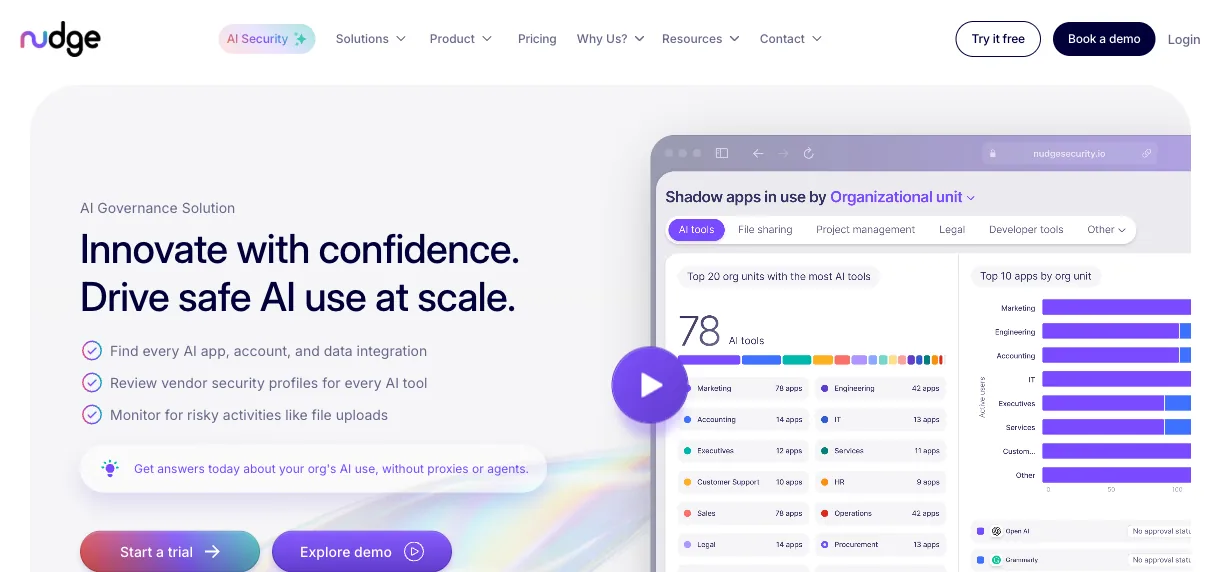
Once you have your inventory, create a simple document with three columns: tool name, what it accesses, and approved or under review. That document is your AI governance register. It does not need to be complex. It just needs to exist.
How AppCoders Can Help
If auditing your AI stack sounds like something you want done right without spending the time yourself, that is exactly what AppCoders builds for SMBs. We design and deploy AI agent systems with built-in oversight layers, usage logging, and governance rules so you stay in control of what runs in your business. Reach out at appcoders.ae/contact to book a free call and discuss what your business needs.
Conclusion
Shadow AI is not a future problem. For 35% of small businesses, it is already here. The good news is that a one-hour audit and a simple governance document puts you ahead of most companies your size.
AI tools save real time and reduce real costs. The businesses that benefit most from them are the ones who know exactly what is running, what it has access to, and who is accountable when it takes an unexpected action.
Start your audit this week. One hour now prevents a much bigger problem later.